The driver is the part of a linear system nobody sees and everybody depends on. An undersized or overloaded driver runs hot, ages early, and is the most common cause of flicker, shutdowns and callbacks. Sizing it correctly takes two minutes and one rule.
Step 1: total the load
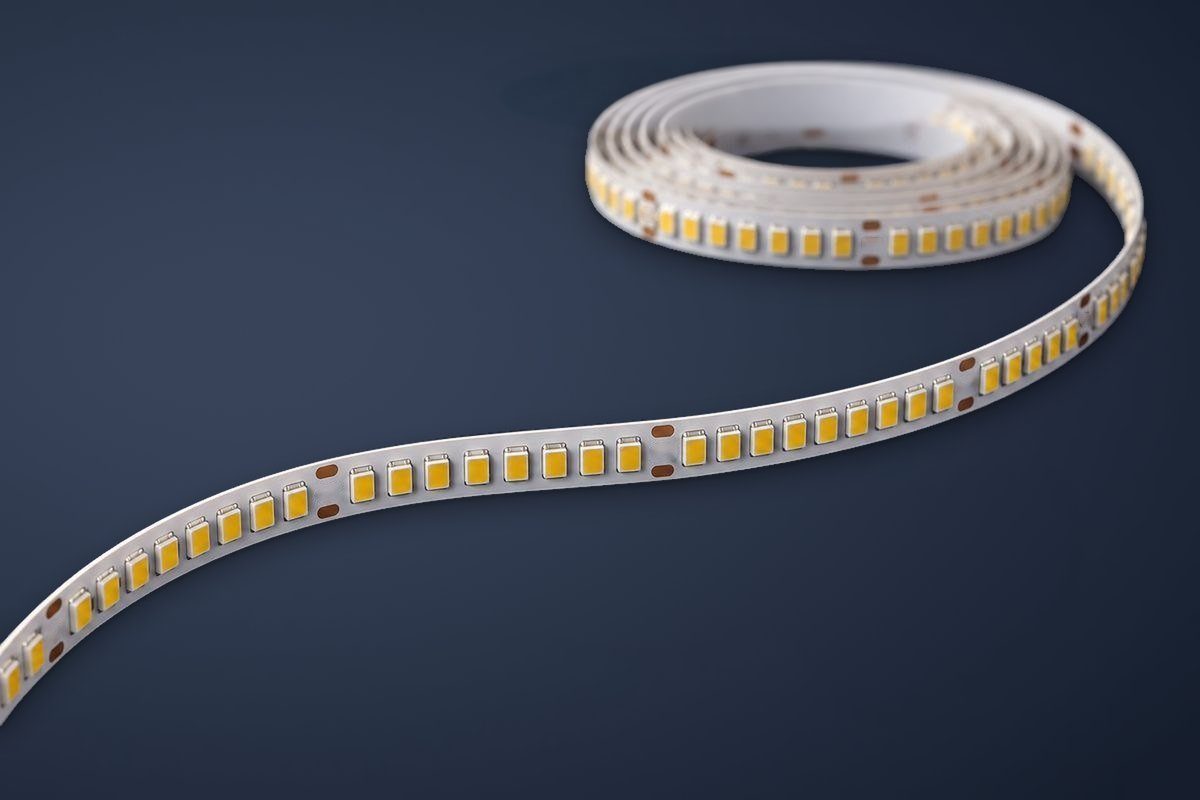
Multiply the length of tape on the driver by its watts per foot. For a 4.4 W/ft tape that is simply feet × 4.4 W. Include every segment the driver will power, including short pieces, toe-kicks and shelf lights on the same circuit.
Step 2: apply the 80% rule
Load a driver to no more than 80% of its rated output. Put another way, the driver's rating should be at least the load divided by 0.8 (load × 1.25).
The headroom covers real-world conditions: warm closets and ceiling cavities, manufacturing tolerance in tape wattage, and stress on startup. A driver running at 70–80% of its rating runs cooler and lasts longer than one pushed to 100%.
Worked examples
| Application | Tape | Load | Load ÷ 0.8 | Driver choice |
|---|---|---|---|---|
| Vanity mirror | 6 ft | 26.4 W | 33 W | 40 W or larger |
| One full run | 16.4 ft | 72.2 W | 90.2 W | 96 W / 100 W output |
| Kitchen under-cabinet: 6 + 8 + 4.5 ft | 18.5 ft | 81.4 W | 101.8 W | Split across two outputs or two drivers |
The kitchen example is the one that catches people out. 81.4 W fits on a 100 W driver on paper, but at 81% it breaks the rule, and it is also near the 100 VA ceiling for a single Class 2 output. Splitting it across two 60 W outputs (about 68% each) is the right answer. It also shortens home runs, which helps with voltage drop.
Step 3: match the driver to the job
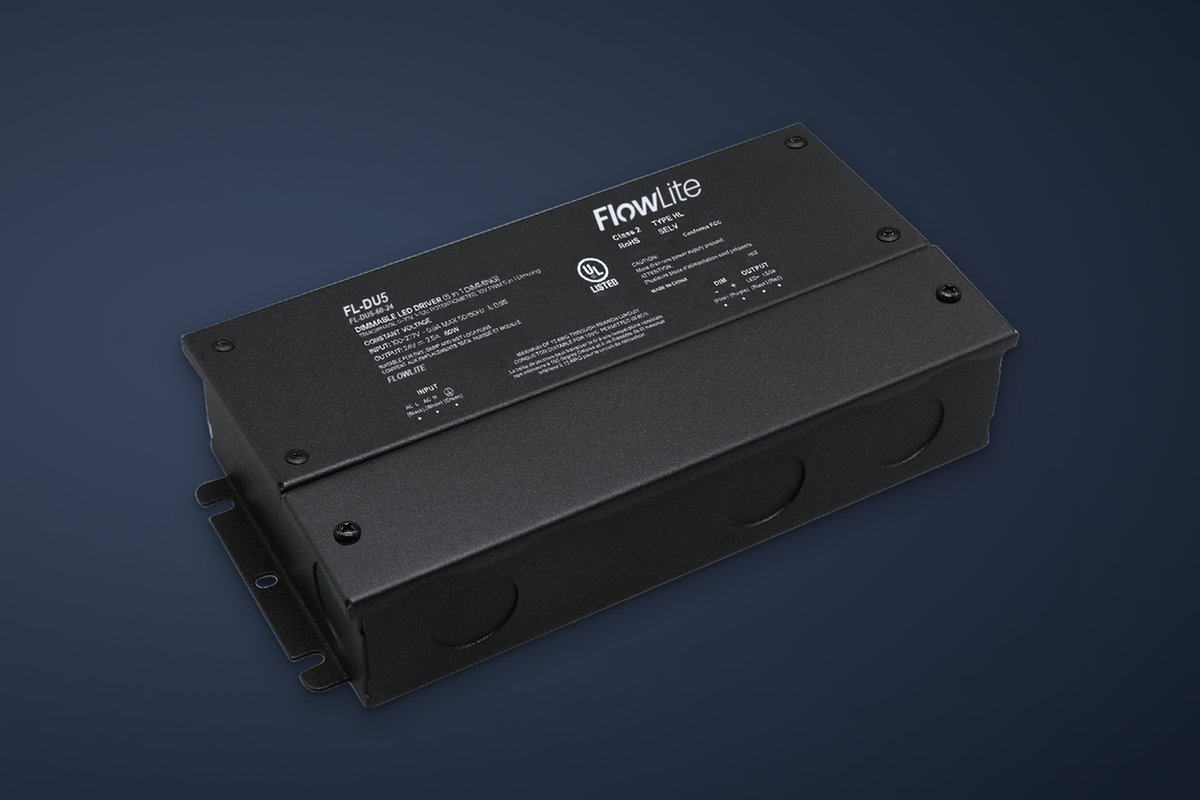
- Output voltage: 24V DC constant voltage for FlowLite tape. Never a constant-current LED driver.
- Dimming: phase (ELV/TRIAC), 0–10V, DMX or DALI, to match the control system. See our dimming protocols guide.
- Location: a driver must be installed in a junction box or an approved enclosure, accessible for service, with room to breathe. Avoid sealed, insulated cavities.
- Listing: use drivers listed for the location (dry, damp, wet) and installation method. Follow the driver's instructions and the applicable code.
Don't forget the line side
Electronic drivers draw a brief surge of current, called inrush, when they switch on. Many drivers on one switch, relay or dimmer can add up. Check the switching device's rating for LED loads, and spread large loads across circuits.
Key takeaways
- Load = feet × W/ft (for 4.4 W/ft tape: × 4.4).
- Driver rating ≥ load ÷ 0.8.
- Class 2 outputs top out at 100 VA at 24V; use multiple outputs for big layouts.
- Match voltage, dimming method and location rating, and keep drivers accessible.