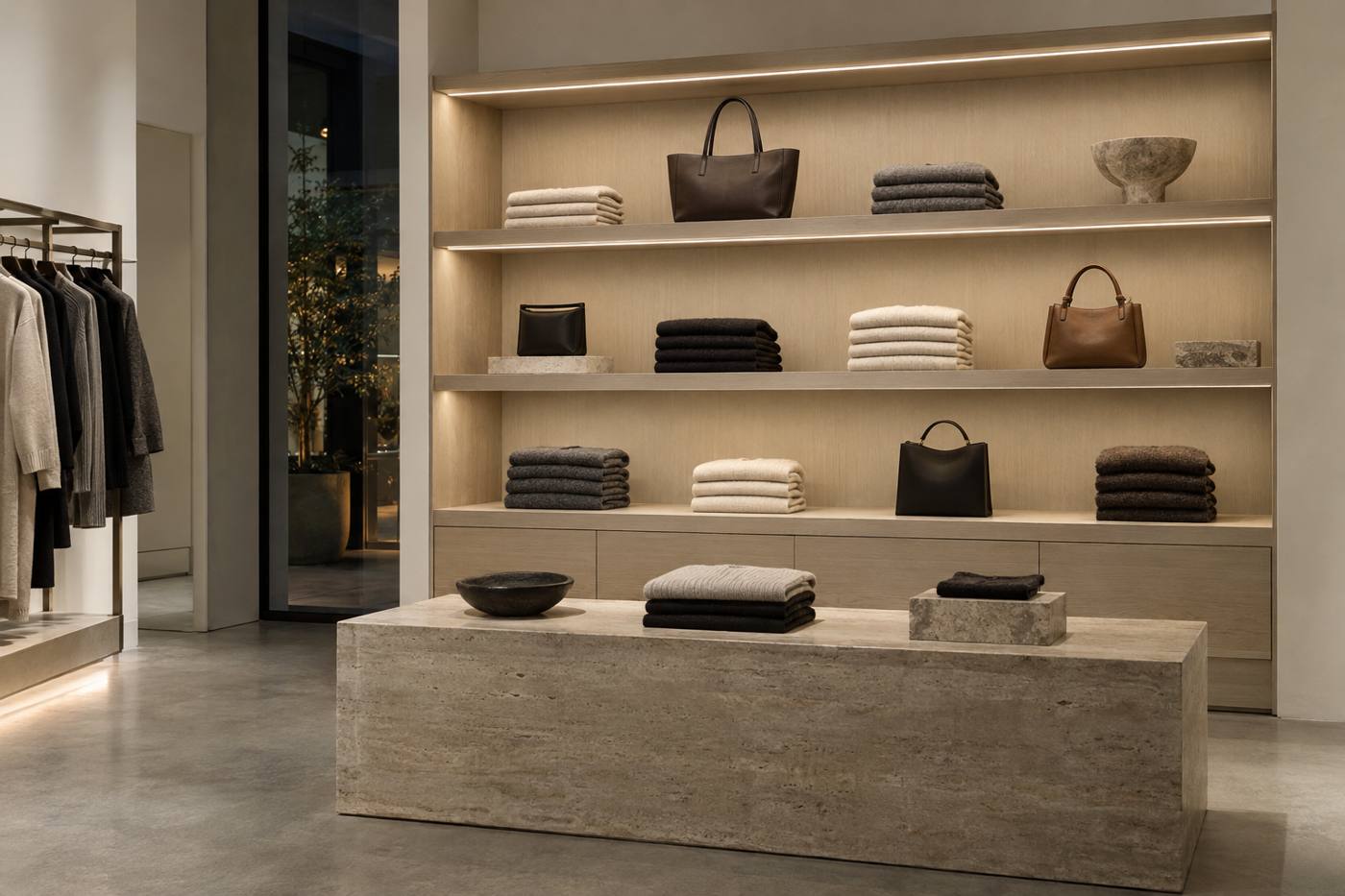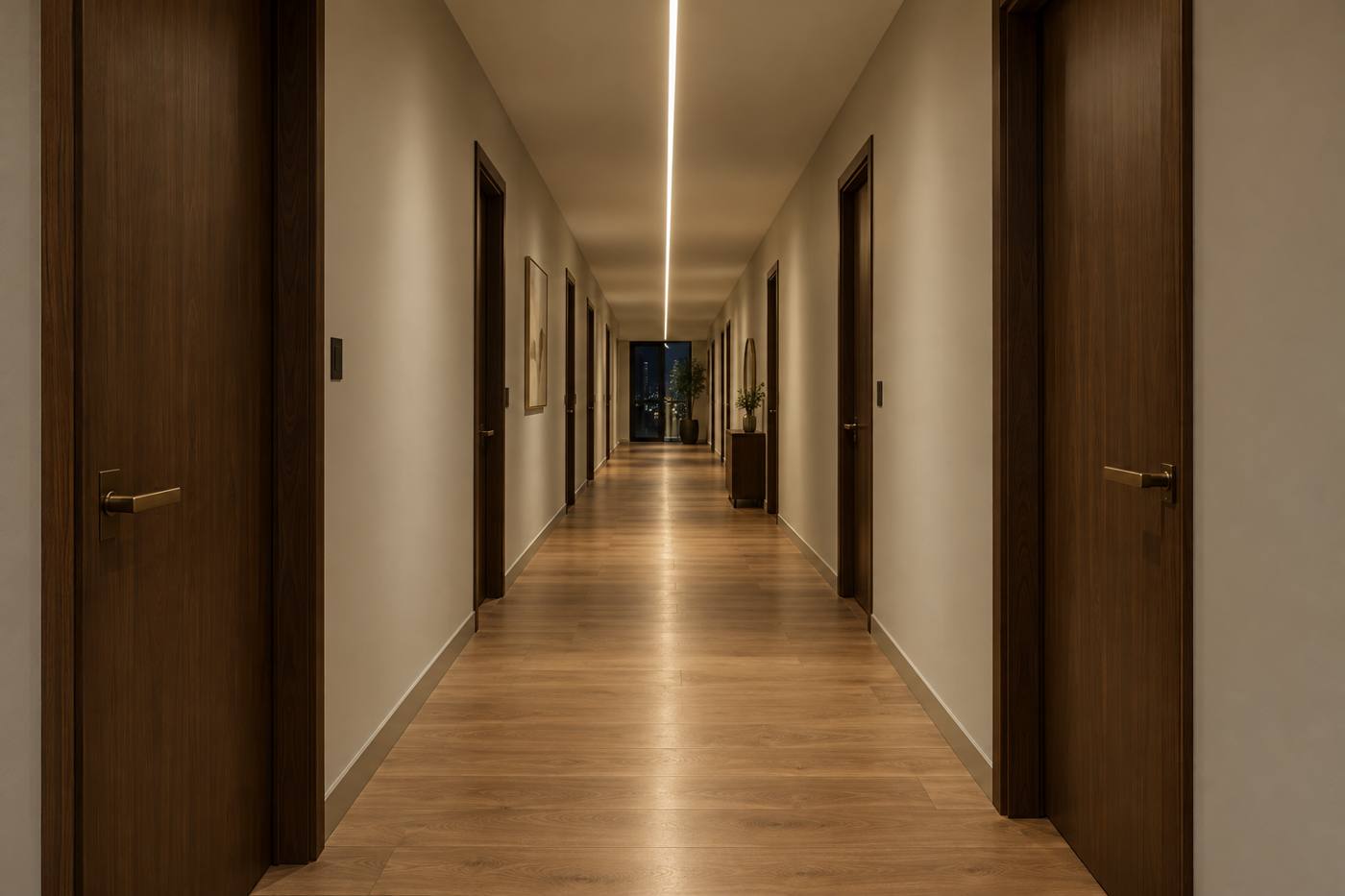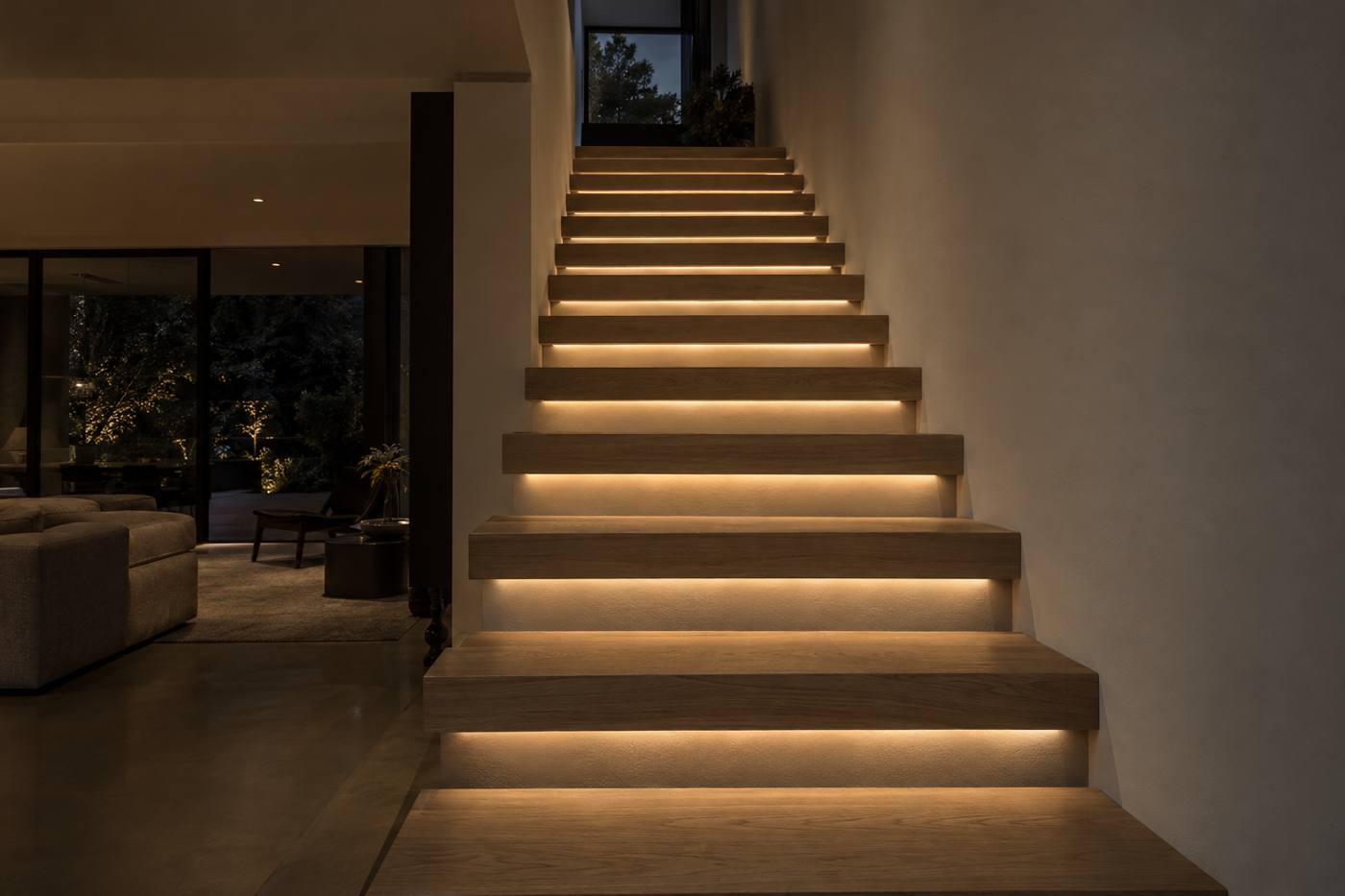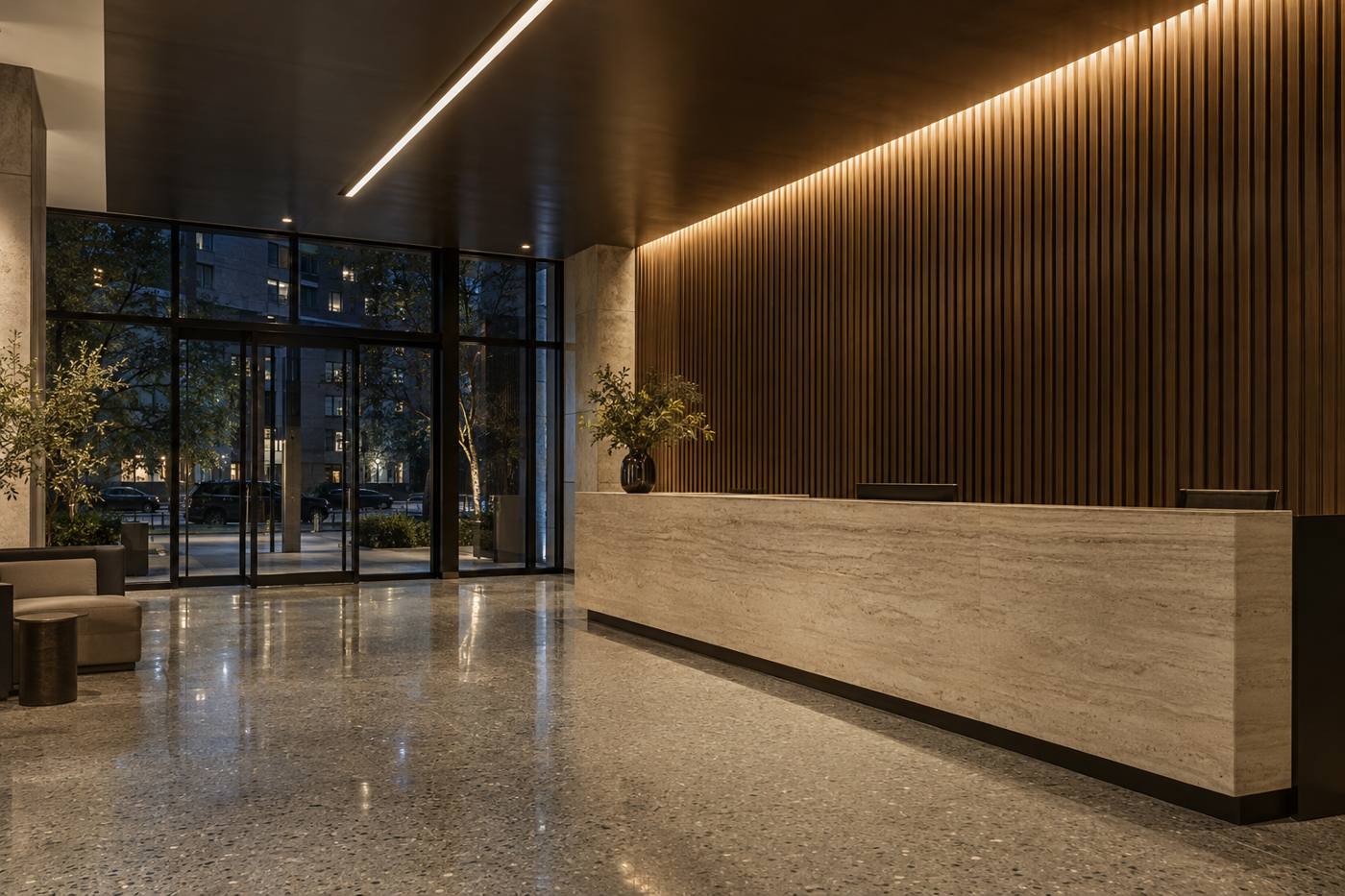
Correlated color temperature (CCT) is the first decision most people make about light and the one they notice most. It sets the mood of a room before anyone registers the fixtures. Getting it right, and keeping it consistent, matters more than almost any other choice in a linear lighting layout.
What the Kelvin number means
CCT describes the color appearance of white light, measured in kelvin (K). Lower numbers look warmer and more amber; higher numbers look cooler and bluer. It describes the light's appearance only. It says nothing about how well the light renders color, which is what CRI and TM-30 are for.
| CCT | Appearance | Typical applications | FlowLite code |
|---|---|---|---|
| 2700K | Warm, intimate, incandescent-like | Living spaces, bedrooms, hospitality, restaurants | FL-TCOB30-24-927 |
| 3000K | Warm white, crisp but inviting | Kitchens, baths, multifamily corridors, lobbies, retail | FL-TCOB30-24-930 |
| 3500K | Neutral white | Offices, amenity spaces, mixed-use, healthcare common areas | FL-TCOB30-24-935 |
| 4000K | Cool white, clean and alert | Workspaces, labs, back-of-house, display of cool materials | FL-TCOB30-24-940 |
How to choose
Start with the use of the room
Spaces for relaxing and gathering usually read best at 2700K–3000K. Spaces for focused work or circulation that should feel bright and clean often move to 3500K–4000K. 3000K is the most common choice for residential and multifamily projects because it stays warm without feeling dim.
Look at the materials
Warm woods, brass and terracotta come alive under 2700K–3000K. Cool stone, white lacquer, stainless steel and concrete often look cleaner at 3500K–4000K. When a palette mixes both, 3000K–3500K is usually the safe middle.
Consider daylight and adjacent sources
Linear light rarely works alone. Match the CCT of the downlights, sconces and decorative fixtures it will sit beside. A 3000K cove next to 4000K downlights reads as a mistake, not a design choice.
Brightness changes with CCT, too
At the same wattage, cooler LEDs typically produce slightly more lumens. A typical 4.4 W/ft high-density tape delivers about 511 lm/ft at 2700K, 520 at 3000K, 533 at 3500K and 550 at 4000K. The difference is small, but if two areas need to look equally bright, keep the CCT the same rather than compensating with output.
A note on Duv
CCT tells you where a source falls between warm and cool. It doesn't tell you whether the light is slightly green or slightly pink at that temperature. That offset from the ideal blackbody curve is called Duv. Two strips labeled 3000K can look different side by side if their Duv differs. Tight binning, covered in our article on MacAdam ellipses, is what keeps this under control.
Key takeaways
- CCT describes how warm or cool the light looks; it says nothing about color rendering.
- 2700K–3000K for living and hospitality, 3500K–4000K for work and clean, cool materials.
- Match every linear element and adjacent fixture within one view.
- Most FlowLite tape is offered from 2700K to 5000K at 90+ CRI, with tunable-white and dim-to-warm series for spaces that change through the day.